This scan of a children’s book comes from a wonderful compilation of a collection coming from between 1860 and the 1920s and assembled in a book: ‘From Mother Goose to Dr Seuss: Children’s Book Covers 1860-1960‘ by H Darling, 1999.
There are a few more covers in the set (mostly without felines, though) that you can see on Flickr and on Bibliodyssey.
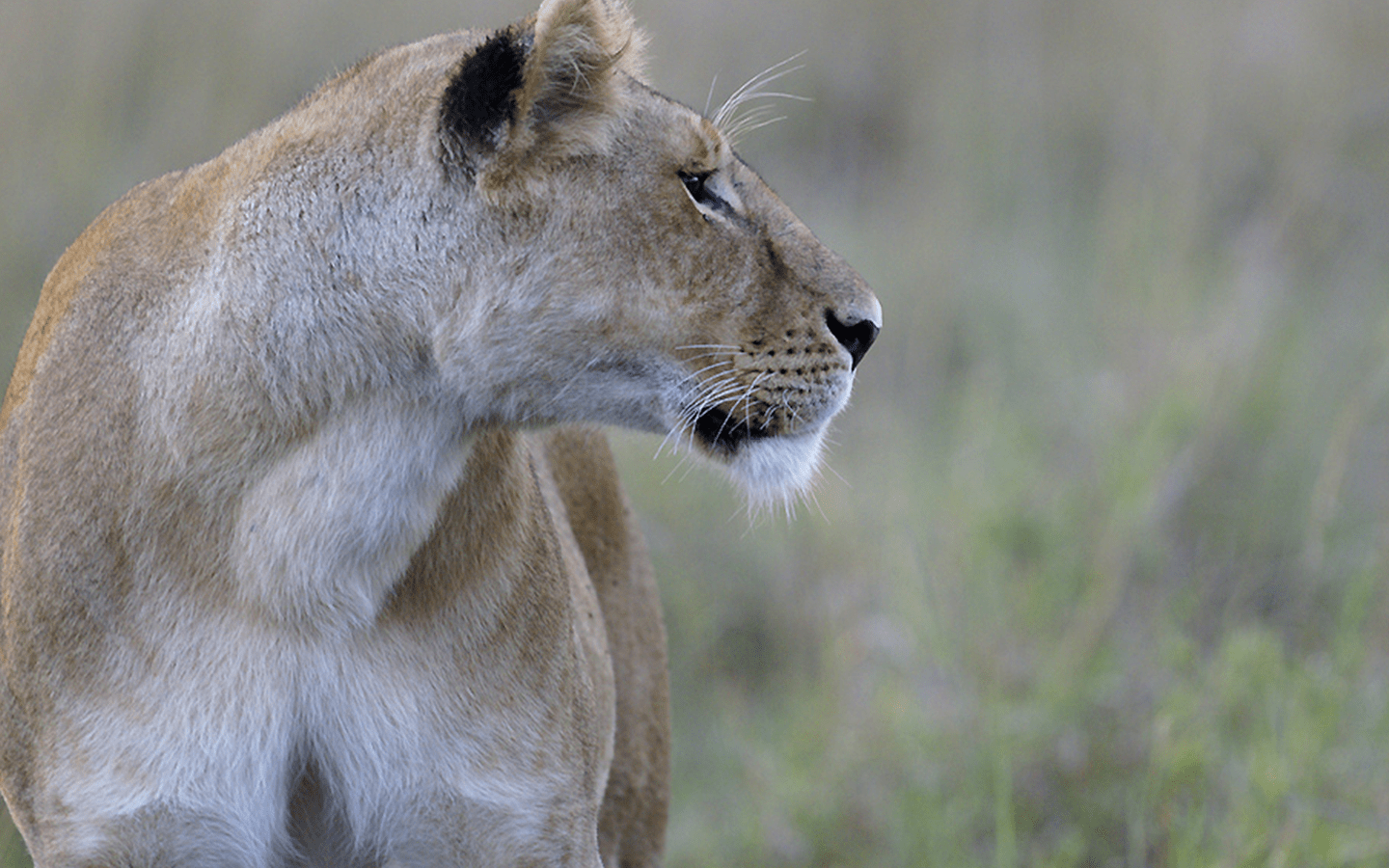
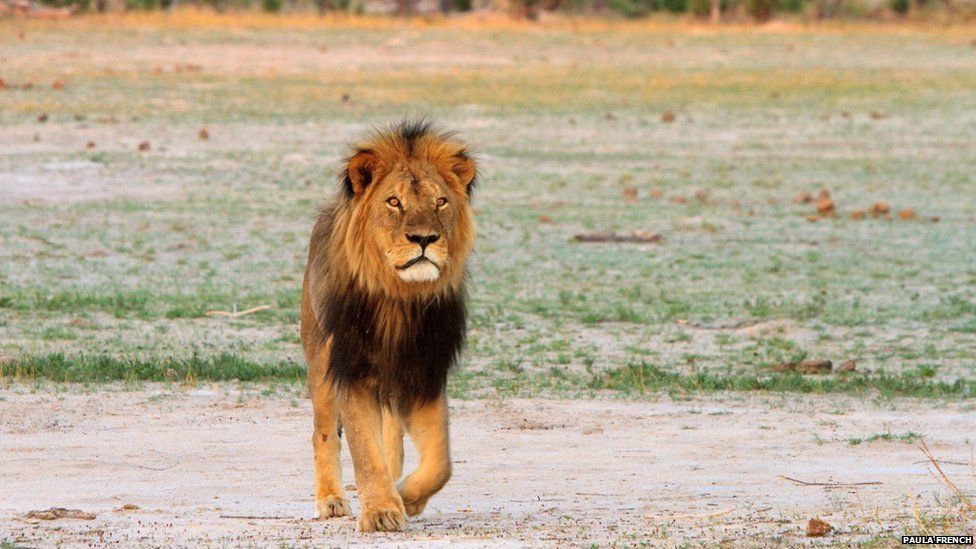
We usually think that a country rich of an impressive wild life like Kenya is nearly out of danger of seeing the full extinction of an emblem of Africa like the lion. This is not all so certain.
According to the Kenya Wildlife Service (KWS), wild lions from Kenya are disappearing quite quickly: 100 lions less each year for the last 10 years. But there are no more than 2000 of them left. The last lion would so die in 20 years.
But Laurence Frank, biologist in the protection group for big cats, Panthera, believes that the KWS estimate is much too low and that the last lion in Kenya has no more than 10 years left!
The pressure applied by the human population onto the wild eco-system of Kenya already seems huge and this is compounded by a smuggling traffic small but measurable.
So, your next safari in Kenya this year may well be the last hope you have to see the king of animals.
A car thief probably got the surprise of his life when he grabbed the light truck from a circus. No doubt he thought he had a good one, but he got more than he bargained for: a 5-year old lion, circus star armed with a set of teeth able to recover the last remnant of honesty from the worse stealing bandit.
The German police found the wrecked truck and Caesar safe and sound. It is not known whether the thief was unable to drive or if the noises from the back of the car were more distracting than the usual mobile phone used while driving.
This is what these visitors of the Lion Safari Park in Johannesburg (South Africa) learned while they were driving slowly in this wildlife park to admire some wild animals. But, this lion found how to open their Toyota’s door with its teeth. The driver had only a few seconds to understand that the best reaction was to press the pedal deep and run away.
Lion opens car door
It would never have happened with a large American SUV, of course.
Nathan Myhrvold may not be an exceptional photographer (after all, he is not known and famous for that, but he succeeded anyway), but his photo essay is a good illustrated summary of the atmosphere of an African photo safari.
The question must be asked. Seriously. When you look at the following picture of tourists having total fun in seeing a full grown lion rushing to their car’s hood all teethes out.
But reality is slightly simpler: These tourists do not take the slightest risk. They are merely visitors to the Werribee Open Range Zoo, in Melbourne, Australia. There, a nicely prepared presentation allows to feel the thrill of being an African prey in all security behind a thick glass window (cutting in two halves the car model).
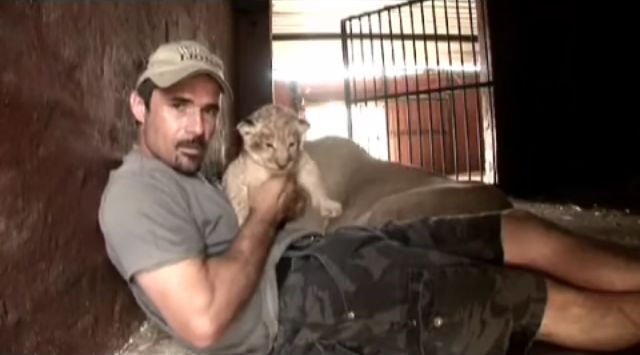
Lions (like many cats) do not like water. Kevin Richardson established such a confidence relationship with these lions that he could convince them to go and swim with him.
There is no limit to true love. Riana Van Nieuwenhuizen truly loves cats: She has got eleven (11!) of them in her South African house.
Nothing really remarquable, except the cats are:
Four cheetahs
Five white lions
Two tigers
…and I don’t count the dogs.
This is love, big lvoe!
Riana tries to help in protecting those endangered species, since 2006 when she adopted her first cheetah, Fiela.
Last but not least, remember that wild animals are still wild animals, even when they are perfectly integrated in a family. In this case, they also have a lot of free space, which must contribute a lot to the overall stability of this adventure.
This is a message that you should have learned from Aesop, if you are a little rat. Unfortunately, some animals can’t read. Here are two examples.
First, a fox found itself in the enclosure of a lion in the Wuppertal zoo (Germany). It left quite quickly after understanding the kind of error it made.
The lion and the fox (Martin Meissner/Associated Press)
The second is even more astonishing since this is simply a mere rodent which decided to go and eat part of the dinner of a leopard of the Santago Rare Leopard Project, in Hertfordshire (UK). The small rat, quite young and inexperienced, but not impressed at all, demonstrated that size is not all. When you got what it takes…
Le léopard et le rat (Copyright (C) Casey Gutteridge)