YLoveBigCats.com

Archive for the 'Leopard' category


ALTA Amur Leopard Conservation

(Wednesday, December 31st, 2008)

The Amur Leopard (from the name of the river flowing at the border between Russia and China, or Far Eastern leopard, Panthera pardus orientalis) is quite certainly the rarest and most endangered big cat in the world because of a wild population of only 30 to 35 individuals [1].

ALTA (the Amur Leopard and Tiger Alliance) regroups 13 non-governmental organisations (NGOs) that decided to fight for the preservation of these animals. Here is a 10-min video presenting the Amur Leopard and the Alliance.


ALTA Amur leopard Conservation - 10 minutes from ALTA movies on Vimeo.

New African agent

(Saturday, December 20th, 2008)

This is not everyday that a new travel agency opens specialized in African wild life and nature (and its big cats). The end of 2008 brings us this event: Creation of Africa Exploration.

The founders went through other African adventures and escapades; This is a good warranty of a fully re-assuring experience and knowledge.

We’ll keep in touch.


Copyright (C) B.Tredez

Copyright (C) B.Tredez

Copyright (C) R.Rey

Copyright (C) R.Rey

Panthera, species and subspecies

(Tuesday, December 16th, 2008)

Panthera is a genus of the family Felidae (the cats), which contains four well-known living species: the tiger, the lion, the leopard and the jaguar. The genus comprises about half of the big cats. One meaning of the word panther is to designate cats of this family. Only these four cat species have the anatomical changes enabling them to roar, due to a modification of the shape of their hyoid bone.

There have been many subspecies of leopard and lion suggested, however most of these are questionable. For example, recently, it has been proposed that all sub-saharan leopards and all sub-saharan lions belong to the same subspecies, as they do not have sufficient genetic distinction between them. Some prehistoric lion subspecies have been described from historical evidence and fossils. They may have been separate species.

However, here is a list of all these species:

Subfamily Pantherinae

Genus Panthera

  • Panthera gombaszoegensis - European jaguar †
  • Panthera leo - Lion
  • Panthera leo atrox - American Lion or North American cave lion †
  • Panthera leo azandica - North East Congo lion
  • Panthera leo bleyenberghi - Katanga lion or Southwest African lion
  • Panthera leo europaea - European lion †
  • Panthera leo fossilis - Early Middle Pleistocene European cave lion †
  • Panthera leo hollisteri - Congo lion
  • Panthera leo krugeri - South African lion or Southeast African lion
  • Panthera leo leo - Barbary lion †
  • Panthera leo melanochaita - Cape lion †
  • Panthera leo massaicus - Masai lion
  • Panthera leo persica - Asiatic lion
  • Panthera leo sinhaleyus - Sri Lanka lion or Ceylon lion †
  • Panthera leo somaliensis - Somali lion
  • Panthera leo spelaea - Eurasian cave lion †
  • Panthera leo senegalensis - West African lion, or Senegal lion
  • Panthera leo vereshchagini - East Siberian and Beringian cave lion †
  • Panthera leo verneyi - Kalahari lion
  • Panthera onca - Jaguar
  • Panthera palaeosinensis - Pleistocene Chinese tiger/leopard †
  • Panthera pardoides - primitive leopard †
  • Panthera pardus - Leopard
  • Panthera pardus adersi - Zanzibar Leopard †
  • Panthera pardus delacouri - Indo-Chinese Leopard
  • Panthera pardus fusca - Indian Leopard
  • Panthera pardus jarvesi - Judean Desert Leopard
  • Panthera pardus japonensis - North China Leopard
  • Panthera pardus jarvisi - Sinai Leopard
  • Panthera pardus kotiya - Sri Lanka Leopard
  • Panthera pardus meas - Java Leopard
  • Panthera pardus nimr - Arabian leopard or South Arabian Leopard
  • Panthera pardus orientalis - Amur Leopard
  • Panthera pardus panthera - Barbary Leopard
  • Panthera pardus pardus - African Leopard
  • Panthera pardus saxicolor - Persian Leopard
  • Panthera pardus tulliana - Anatolian Leopard
  • Panthera schaubi - a prehistoric short-faced leopard †
  • Panthera tigris - Tiger
  • Panthera tigris altaica - Siberian tiger or Amur tiger
  • Panthera tigris amoyensis - South China tiger
  • Panthera tigris balica - Balinese tiger †
  • Panthera tigris corbetti - Indochinese tiger
  • Panthera tigris jacksoni - Malayan tiger
  • Panthera tigris sondaica - Javan tiger †
  • Panthera tigris sumatran - Sumatran tiger
  • Panthera tigris tigris - Bengal tiger
  • Panthera tigris virgata - Caspian tiger †
  • Panthera toscana - Tuscany lion or Tuscany jaguar †
  • Panthera youngi - A prehistoric Chinese lion-like cat †

Nota bene: † denotes a subspecies that is disappeared.

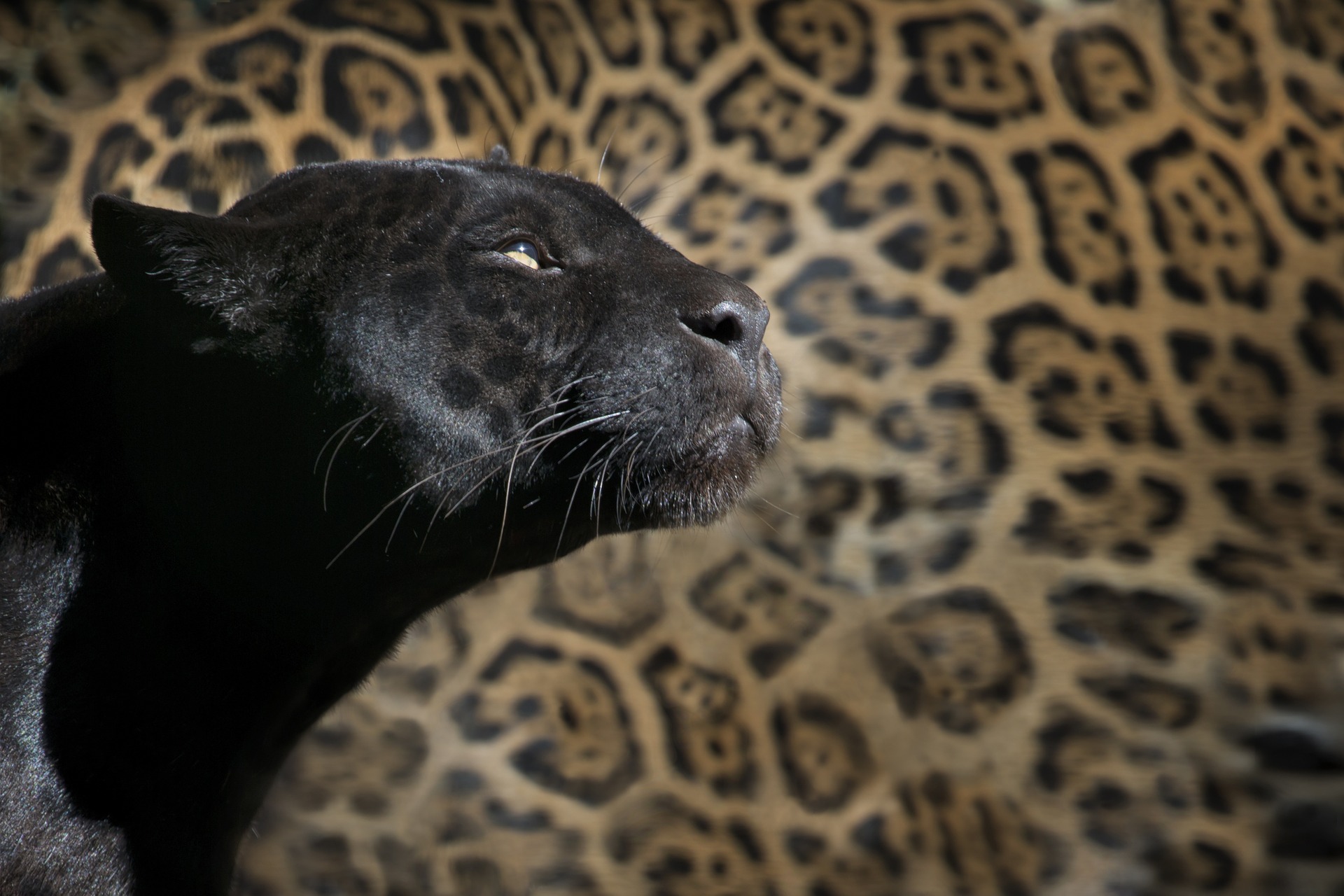
Beware: The animal known as a black panther is not a separate species, but merely a mutant form of leopard and jaguar where the recessive gene that controls the spots has mutated so the creature appears all black.

Leopards by Florence Diguer

(Sunday, November 23rd, 2008)

Florence is a friend who came to wildlife photography only relatively recently, but she’s progressing quite quickly. Sometimes, she is lucky enough to make an exceptional encounter. Today, she is showing us leopards found in the Okavango delta in Botswana, including a family feeding on a prey hauled up in a tree to protect it from the other predators.

Young leopards - Copyright (C) 2008 Florence Diguer

Young leopards - Copyright (C) 2008 Florence Diguer

I invite you to visit her gallery.

Leopard buried with 12,000-year-old shaman

(Thursday, November 20th, 2008)

Found in the North of Israel, here is a shaman buried 12,000 years ago, with some significant grave offerings:

  • 50 tortoise shells
  • A leopard pelvis
  • A human foot

Right! The leopard does not seem in very good company, but it must have been quite a burial.

Source: Science Blog.

Rarest big cat caught for a check-up

(Saturday, November 8th, 2008)

Amur Leopard (Panthera pardus orientalis). Pittsburgh Zoo. Colin Hines.

Amur Leopard (Panthera pardus orientalis). Pittsburgh Zoo. Colin Hines.

When you are the rarest wild big cat, you deserve some unusual attention. This is what explains the special treatment of the Amur Leopard or Far Eastern Leopard (Panthera pardus orientalis). It is widely considered as the single most endangered species of big cats with less than 50 individuals living in the wild (and only 10 to 15 females among them).

Because of this status, in order to evaluate very precisely the medical condition of the population, the Wildlife Conservation Society (WCS) and the Russian Academy of Sciences Institute of Biology and Soils (IBS) captured one female Far Eastern leopard in Primorsky Krai along the Russian-Chinese border. The aim is to do a medical checkup and to study the effects of the intense inbreeding of such a small animal population.

The animal, nicknamed “Alyona”, is in good health for its 8-10 years of age, but with a slight heart murmur that may be indicative of a genetic condition since it was also shared by other animals captured in 2006 and 2007 for the same reasons. It has already been released.

Source: Science Blog.

PS: Did you see the lovely eyes of this leopard?

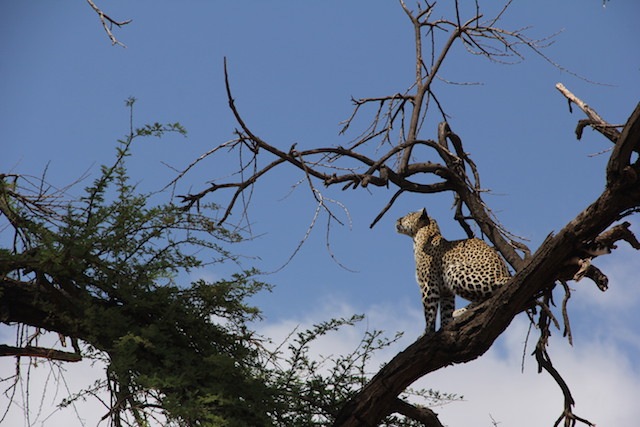
Leopard in a tree

(Tuesday, October 28th, 2008)

Leopard in a tree - Copyright (C) 2008 Yves Roumazeilles

Leopard in a tree - Copyright (C) 2008 Yves Roumazeilles

Click on the thumbnails to enlarge them

Leopard (Panthera pardus, Léopard, Leopardo), Masai Mara, Kenya, September 2008.

Lions would want to be house cats

(Friday, October 17th, 2008)

Or so it seems according to this advertisment for cat food.

Lions are just big house cats

Lions are just big house cats

Leopard cub

(Saturday, September 13th, 2008)

Leopard cub - Don't squeeze me!

Leopard cub - Don't squeeze me!

Leopard cub seen in Ghamadan zoo near Amman.


http://www.ylovebigcats.com/

Copyright (c) 2008 - Yves Roumazeilles (all rights reserved)

Latest update: 19-nov-08

Google.com
YLoveBigCats.com
YLoveBigCats.com