YLoveBigCats.com

Archive for the 'Jaguar' category


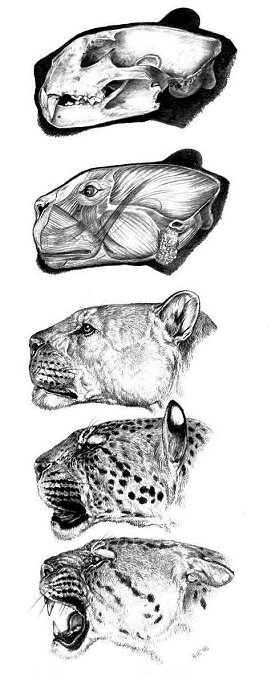
When pumas, jaguars and cheetahs lived in Europe

(Monday, April 6th, 2009)

Big cats like lions, pumas, jaguars, cougars, cheetahs or leopards disappeared from continents where they could be found in prehistoric times. Here is a series of articles about prehistoric felines.

Viretailurus

Source: Tretrapod Zoology

Aztec jaguar

(Friday, March 20th, 2009)

The jaguar (Panthera onca) has been a powerful predator of Central America. In Aztec times, it was not threatened to disparition as today, of course. But, on the contrary, it was considered a powerful god with extensive powers associated to war and warriors: Ocelotl.

This is the main reason why it often appears in the iconography (paintings as well as sculptures) that has been preserved from the fall of this astonishing civilisation brought up by the Aztecs. Some pictures of this moment in time.


Ocelotl

Ocelotl

Ocelotl

Ocelotl

Jaguar mural

Jaguar mural

JAguar

JAguar

Ocelotl

Ocelotl

aztec_jaguar_warrior_2 aztec_jaguar_warrior
Click the thumbnails to enlarge them

Fail: Capturing last US jaguar leads to its death

(Sunday, March 8th, 2009)

Macho B

Macho B

Jaguar (Panthera onca) was thought to be absent from the United States of America territory. But for a few years, people have been tracking the moves of two animals Macho A and Macho B within the borders of the Arizona state. Macho A was probably dead a few years ago and Macho B was now considered as the last jaguar living in the wild on US soil.

However, recently caught to give it a GPS tracking collar, Macho B was rather old (15-16 years old). After being freed again by the Arizona Game and Fish Department, it started showing troubling signs of weakness and was trapped again for a medical checkup. Verdict: Severe kidney failure. It explained too well the slow moves and gait.

In front of the severity of the illness, Macho B had to be euthanized.

During the autopsy, specialists drew a frighteningly precise conclusion: The recent catch probably affected the animal to the point of being death cause. Chemicals used to calm it down, more precisely, would have been at the origin of its troubles.

So, there is no longer any jaguar living in the wild in the USA. The only good news seems to be the signature by B.Obama of an act repelling the recent amendment by G.W.Bush that effectively put the wildlife experts at Fish and Wildlife Services and the National Marine Fisheries Service out of the loop for projects that could cause harm to endangered species. Now again, the interests of wildlife will be taken into account and the industrial companies will no longer have a free ride. Science is coming back.

Sources: Los Angeles Times, Defenders of wildlife, Futura-Sciences, Sierra Club & Wikipedia.

Jaguar back in Mexico

(Monday, February 16th, 2009)

Jaguar (SINC / Octavio Monroy-Vilchis et al)

Jaguar (SINC / Octavio Monroy-Vilchis et al)

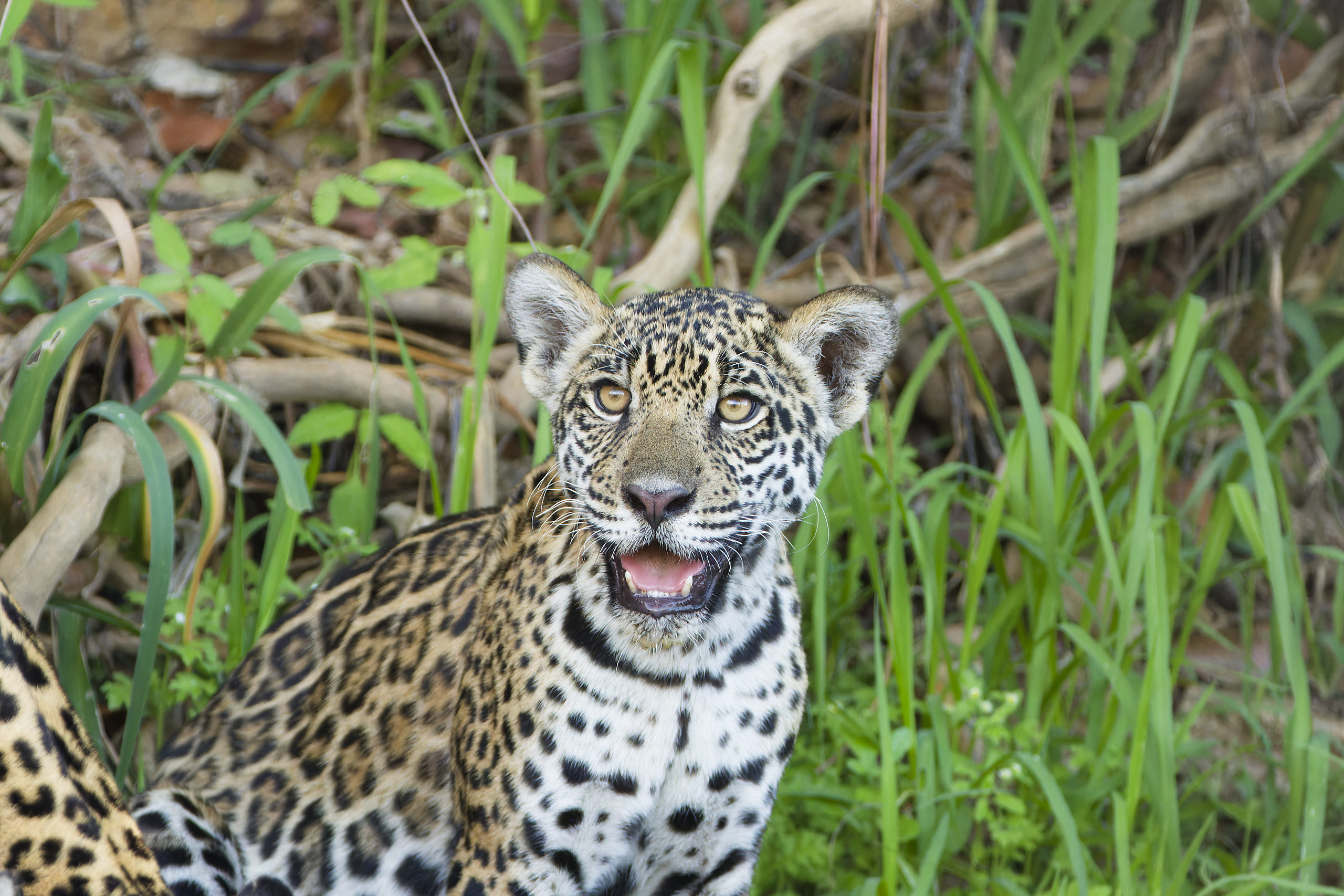
It was thought that jaguars had completely disappeared from Central Mexico since the beginning of the XXth Century. But here is one of these predators taken by a photographic trap in the Sierra Nanchititla Natural Reserve.

In total, there were three photos shot and scientists also found jaguar feces in this region.

It is supposed that if the animal has not been observed (yet) by human beings, it’s because of the fragmentation of its habitat forces it to walk out of view and in high-altitude mountainous zones that are not easily accessible.

Nevertheless, jaguar (Panthera onca) is still an extreemely fragile animal, whose survival is strictly not made certain by the mere presence of one isolated individual (maybe not completely alone, but it is considered that several dozen indiduals are needed to allow the difficult perpetuation of a wild species).

Birth of a baby jaguar

(Tuesday, January 27th, 2009)

The Palm Beach zoo now has a new jaguar cub (a female born October 28, 2008 at 4:13:32 AM). What is further interesting is that they shot a black-and-white video of the birth itself.


Birth at the Palm Beach zoo

Birth at the Palm Beach zoo

Panthera, species and subspecies

(Tuesday, December 16th, 2008)

Panthera is a genus of the family Felidae (the cats), which contains four well-known living species: the tiger, the lion, the leopard and the jaguar. The genus comprises about half of the big cats. One meaning of the word panther is to designate cats of this family. Only these four cat species have the anatomical changes enabling them to roar, due to a modification of the shape of their hyoid bone.

There have been many subspecies of leopard and lion suggested, however most of these are questionable. For example, recently, it has been proposed that all sub-saharan leopards and all sub-saharan lions belong to the same subspecies, as they do not have sufficient genetic distinction between them. Some prehistoric lion subspecies have been described from historical evidence and fossils. They may have been separate species.

However, here is a list of all these species:

Subfamily Pantherinae

Genus Panthera

  • Panthera gombaszoegensis – European jaguar †
  • Panthera leo – Lion
  • Panthera leo atrox – American Lion or North American cave lion †
  • Panthera leo azandica – North East Congo lion
  • Panthera leo bleyenberghi – Katanga lion or Southwest African lion
  • Panthera leo europaea – European lion †
  • Panthera leo fossilis – Early Middle Pleistocene European cave lion †
  • Panthera leo hollisteri – Congo lion
  • Panthera leo krugeri – South African lion or Southeast African lion
  • Panthera leo leo – Barbary lion †
  • Panthera leo melanochaita – Cape lion †
  • Panthera leo massaicus – Masai lion
  • Panthera leo persica – Asiatic lion
  • Panthera leo sinhaleyus – Sri Lanka lion or Ceylon lion †
  • Panthera leo somaliensis – Somali lion
  • Panthera leo spelaea – Eurasian cave lion †
  • Panthera leo senegalensis – West African lion, or Senegal lion
  • Panthera leo vereshchagini – East Siberian and Beringian cave lion †
  • Panthera leo verneyi – Kalahari lion
  • Panthera onca – Jaguar
  • Panthera palaeosinensis – Pleistocene Chinese tiger/leopard †
  • Panthera pardoides – primitive leopard †
  • Panthera pardus – Leopard
  • Panthera pardus adersi – Zanzibar Leopard †
  • Panthera pardus delacouri – Indo-Chinese Leopard
  • Panthera pardus fusca – Indian Leopard
  • Panthera pardus jarvesi – Judean Desert Leopard
  • Panthera pardus japonensis – North China Leopard
  • Panthera pardus jarvisi – Sinai Leopard
  • Panthera pardus kotiya – Sri Lanka Leopard
  • Panthera pardus meas – Java Leopard
  • Panthera pardus nimr – Arabian leopard or South Arabian Leopard
  • Panthera pardus orientalis – Amur Leopard
  • Panthera pardus panthera – Barbary Leopard
  • Panthera pardus pardus – African Leopard
  • Panthera pardus saxicolor – Persian Leopard
  • Panthera pardus tulliana – Anatolian Leopard
  • Panthera schaubi – a prehistoric short-faced leopard †
  • Panthera tigris – Tiger
  • Panthera tigris altaica – Siberian tiger or Amur tiger
  • Panthera tigris amoyensis – South China tiger
  • Panthera tigris balica – Balinese tiger †
  • Panthera tigris corbetti – Indochinese tiger
  • Panthera tigris jacksoni – Malayan tiger
  • Panthera tigris sondaica – Javan tiger †
  • Panthera tigris sumatran – Sumatran tiger
  • Panthera tigris tigris – Bengal tiger
  • Panthera tigris virgata – Caspian tiger †
  • Panthera toscana – Tuscany lion or Tuscany jaguar †
  • Panthera youngi – A prehistoric Chinese lion-like cat †

Nota bene: † denotes a subspecies that is disappeared.

Beware: The animal known as a black panther is not a separate species, but merely a mutant form of leopard and jaguar where the recessive gene that controls the spots has mutated so the creature appears all black.

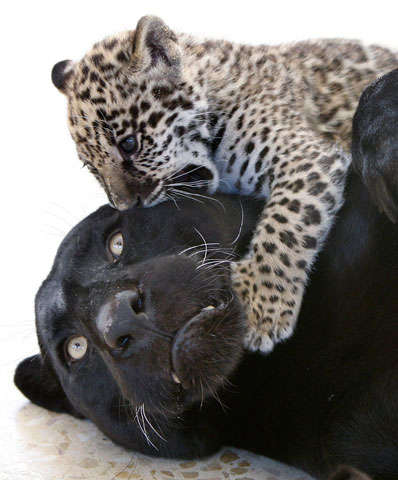
Black baby jaguar in Peru

(Wednesday, September 24th, 2008)

Black baby jaguar

Black baby jaguar

The cute little cub was born in the Huachipa zoo in Lima, Monday, May 5, 2008.


http://www.ylovebigcats.com/

Copyright (c) 2008-2009 - Yves Roumazeilles (all rights reserved)

Latest update: 21-may-09

Google.com
YLoveBigCats.com
YLoveBigCats.com