Happy new year
(Friday, January 2nd, 2009)

(Wednesday, December 31st, 2008)
The Amur Leopard (from the name of the river flowing at the border between Russia and China, or Far Eastern leopard, Panthera pardus orientalis) is quite certainly the rarest and most endangered big cat in the world because of a wild population of only 30 to 35 individuals [1].
ALTA (the Amur Leopard and Tiger Alliance) regroups 13 non-governmental organisations (NGOs) that decided to fight for the preservation of these animals. Here is a 10-min video presenting the Amur Leopard and the Alliance.
(Saturday, December 20th, 2008)
This is not everyday that a new travel agency opens specialized in African wild life and nature (and its big cats). The end of 2008 brings us this event: Creation of Africa Exploration.
The founders went through other African adventures and escapades; This is a good warranty of a fully re-assuring experience and knowledge.
We’ll keep in touch.
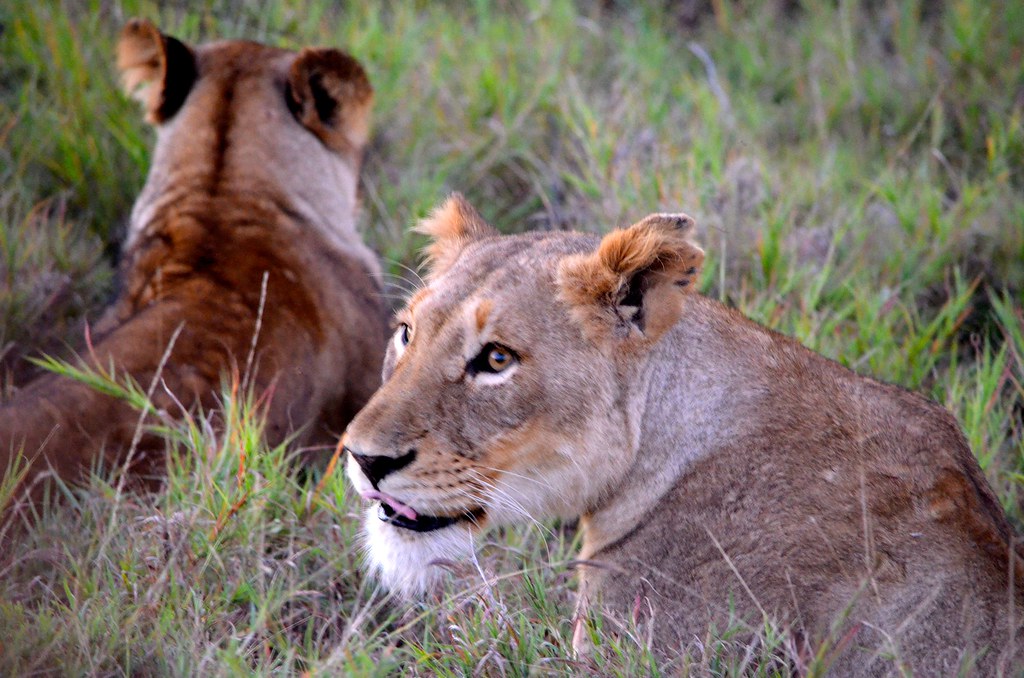
![]() Copyright (C) B.Tredez |
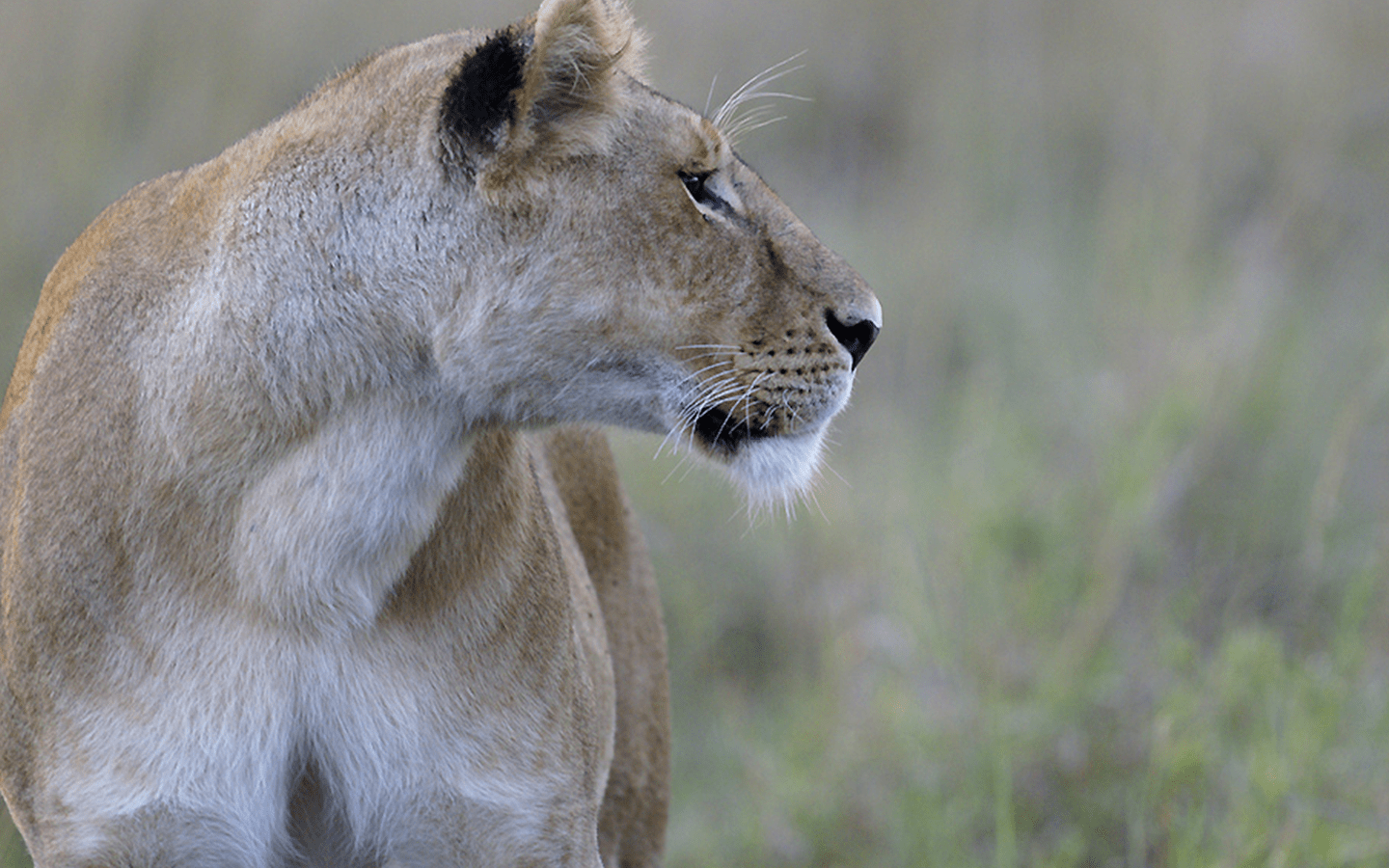
![]() Copyright (C) R.Rey |
(Tuesday, December 16th, 2008)
This is the risk in this India sanctuary.
(Tuesday, December 16th, 2008)
Panthera is a genus of the family Felidae (the cats), which contains four well-known living species: the tiger, the lion, the leopard and the jaguar. The genus comprises about half of the big cats. One meaning of the word panther is to designate cats of this family. Only these four cat species have the anatomical changes enabling them to roar, due to a modification of the shape of their hyoid bone.
There have been many subspecies of leopard and lion suggested, however most of these are questionable. For example, recently, it has been proposed that all sub-saharan leopards and all sub-saharan lions belong to the same subspecies, as they do not have sufficient genetic distinction between them. Some prehistoric lion subspecies have been described from historical evidence and fossils. They may have been separate species.
However, here is a list of all these species:
Genus Panthera
Nota bene: †denotes a subspecies that is disappeared.
Beware: The animal known as a black panther is not a separate species, but merely a mutant form of leopard and jaguar where the recessive gene that controls the spots has mutated so the creature appears all black.
(Monday, November 24th, 2008)
When you want to suicide, there are plenty of ways. Some are prone to fail, some are difficult, some are discreet, some are gory and unpleasant for everybody around. That’s the last option that a worker at the Singapore Zoo has chosen for a public suicide: He jumped into the white tiger enclosure after using a broom to excite them.
The two animals left him dead, bitten on the neck and with a fractured skull, when the zoo keepers arrived. You don’t mess with wild big cats, even in a zoo.
Source: Straits Times.
(Sunday, November 23rd, 2008)
Florence is a friend who came to wildlife photography only relatively recently, but she’s progressing quite quickly. Sometimes, she is lucky enough to make an exceptional encounter. Today, she is showing us leopards found in the Okavango delta in Botswana, including a family feeding on a prey hauled up in a tree to protect it from the other predators.
I invite you to visit her gallery.
(Thursday, November 20th, 2008)
Found in the North of Israel, here is a shaman buried 12,000 years ago, with some significant grave offerings:
Right! The leopard does not seem in very good company, but it must have been quite a burial.
Source: Science Blog.
(Tuesday, November 18th, 2008)
The Sabertooth cat (Smilodon fatalis) is definitely the most famous fossil big cat. Armed with impressive canines, it was certainly quite a sight. These teeth were probably powerful weapons. But they don’t tell us anything about other non-fossilized issues, like the colour of its coat or its social behaviour.
But, here comes a little surprise. As a matter of fact, it is possible to identify some elements of its behaviour, despite the millions of years between us and them.
The Biology Letters of Royal Society dated 28 October 2008 published the results of a very interesting scientific study. Observing that -today- the calls of a wounded animal tend to attract predators from quite far, but that species with a strong social bond (living in group) are attracted more than others, they went back to the sabertooth cat fossils of the amazingly rich site of Rancho La Brea in California. There, scientists have found a large quantity of sabertooth cats and their victims stuck in the tar pits that helped preserve their fossils (in large quantities). The observation of the proportion of these fossils becomes a strong argument for a Smilodon fatalis with a very social behaviour and attracted by the carcasses of herbivore animals stuck in marshes or tar pits.
Think about it. Not only was the animal an impressive sight, but it probably hunted in groups, maybe like lion prides of modern Africa! I would have liked to go on photo safari to find them.
Source: Blog Science.
Copyright (c) 2008 - Yves Roumazeilles (all rights reserved)
Latest update: 19-nov-08